When South Sudan became the world’s youngest nation in July 2011, there was an almost palpable sense of optimism. I still remember sitting in Khartoum shortly after independence, during a dinner with a Sudanese businessman. When I asked him about the future of the new state, he paused and said, “Give it a couple of years, and they will start fighting among themselves.” Surprised, I pressed him for reasons. His answer was simple but prophetic: the long struggle for independence from Sudan had created unity; once that external struggle was gone, internal divisions would resurface. Barely two years later, in December 2013, his words proved true as the young country plunged into civil war.
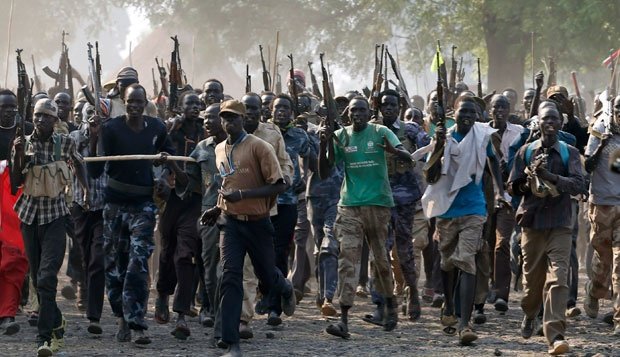
Working on the ground in South Sudan as a humanitarian, I witnessed first-hand the fragile hope that existed alongside deep mistrust. Communities welcomed us, but always with a certain caution they had seen promises of peace come and go. Conversations with government officials, civil society leaders, and fellow aid workers revealed the same concern: the foundations of the new state were shallow, institutions weak, and ethnic loyalties stronger than national identity. The rivalry between President Salva Kiir and Vice President Riek Machar, fueled by Dinka–Nuer tensions, erupted into violence that displaced millions and created one of the world’s worst humanitarian crises.
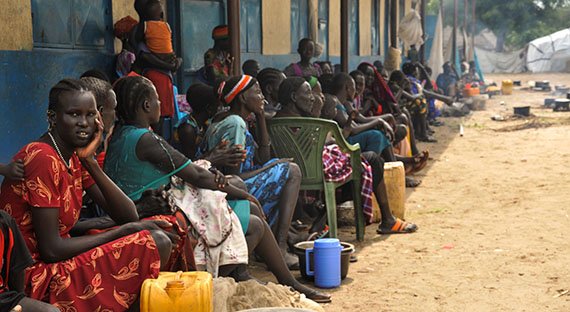
Today, South Sudan stands at another critical juncture. Reports before the United Nations Security Council describe escalating violence, political paralysis, and renewed repression of opposition voices. The 2018 Revitalized Peace Agreement, while imperfect, remains the only viable roadmap to stability. Yet, its implementation has stalled—security sector reform is incomplete, political detainees remain behind bars, and preparations for the 2026 elections are faltering. At the same time, humanitarian needs are staggering: nearly 9.3 million people require aid, with over 7 million facing acute food insecurity. Climate shocks, including recurrent floods and droughts, magnify vulnerabilities, while violence against aid workers undermines relief efforts.
What is striking is how the cycle of conflict, fragility, and humanitarian emergency has become self-reinforcing. Generations of South Sudanese grow up with little faith in the state, while elites consolidate power at the expense of reconciliation. And yet, amid despair, there are glimpses of resilience. Local communities continue to demonstrate extraordinary solidarity, sharing scarce resources with those displaced. Some institutional steps, such as the judiciary’s new reform plan and the resumption of the legislature, suggest that state-building is not entirely stalled.
The challenge is whether South Sudan’s leaders, backed by regional and international actors, can break free from zero-sum politics. The international community has a role, but it cannot substitute for political will. As I saw in villages across Jonglei and Unity States, ordinary people want peace more than anything—they want schools instead of military camps, clinics instead of cantonments, and roads instead of checkpoints. They want the promises of 2011 to mean something.
South Sudan’s future will depend on whether its leaders heed those voices. The warning I heard in Khartoum years ago remains relevant: unity cannot survive on independence alone. Without reconciliation, inclusive governance, and credible elections, the country risks sliding back into the abyss. The “turning point” described at the United Nations is not abstract it is a choice, one that will determine whether South Sudan remains trapped in fragility or finally realizes the promise of its hard-won independence.


Leave a Reply to Nathaniel Maral Cancel reply