Reading Paradise by Abdulrazak Gurnah, who was awarded the Nobel Prize in Literature in 2021, is an experience that is at once moving and unsettling. The novel takes us into East Africa at the turn of the twentieth century, a time when trade routes, cultural exchanges, and the growing shadow of European colonialism were reshaping entire societies. At the heart of this narrative is Yusuf, a boy whose life is dramatically altered when his parents send him away to serve a wealthy merchant. Through Yusuf’s eyes, the reader encounters both the allure and the brutality of a world in flux, where every step toward adulthood is accompanied by complex moral and emotional challenges.
What makes this book remarkable is not only its story but also the quiet intensity of Gurnah’s prose. His writing unfolds with deliberate patience, allowing the beauty of East African landscapes, towns, and coastlines to breathe on the page, while at the same time never shying away from the harsh realities of exploitation, servitude, and the looming presence of colonial conquest. Yusuf’s journey is deeply personal, yet it mirrors the larger experiences of countless individuals whose lives were shaped by forces beyond their control. In that sense, the novel becomes both an intimate coming-of-age story and a historical reflection on an entire region.
Gurnah’s ability to capture the subtleties of human emotion is extraordinary. He portrays longing, faith, betrayal, and resilience with a sensitivity that makes the characters feel both vulnerable and deeply human. The relationships Yusuf forms along the way are fragile and often fraught with unspoken power dynamics, reminding us how colonial and economic pressures seep into even the most personal aspects of life. By avoiding easy judgments, Gurnah leaves the reader to grapple with the contradictions of love and loyalty in a fractured world.
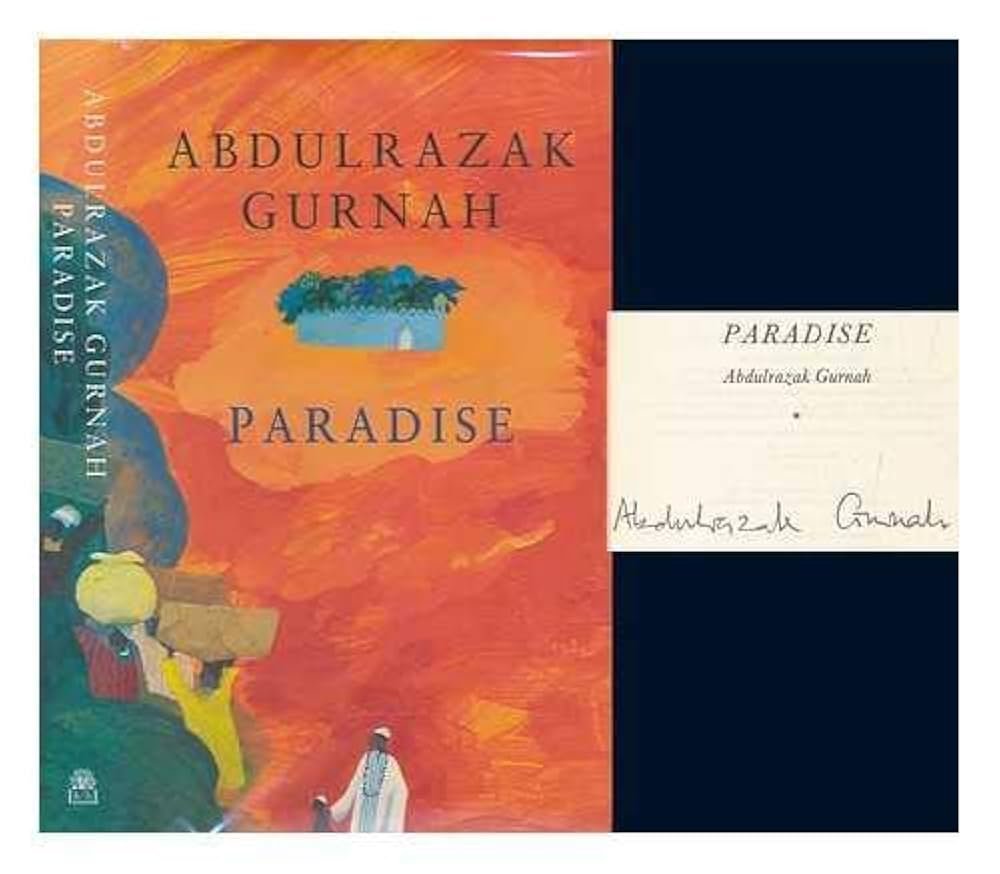
The Nobel Committee’s decision to honor Gurnah was a recognition not only of his literary brilliance but also of his commitment to giving voice to histories and experiences that are too often overlooked. Paradise exemplifies why his work matters. It does not romanticize Africa’s past, nor does it reduce colonial encounters to simple binaries of good and evil. Instead, it presents history in all its painful complexity, inviting the reader to reflect on what it means to live with dignity amid dislocation, uncertainty, and change.
For anyone interested in literature that bridges personal narrative with global history, Paradise is essential reading. It reminds us that novels can be both artistic and political, that they can carry the weight of memory while also illuminating the resilience of the human spirit. Gurnah’s work resonates far beyond its setting, offering timeless insights into how societies and individuals adapt, resist, and endure.
Leave a Reply